
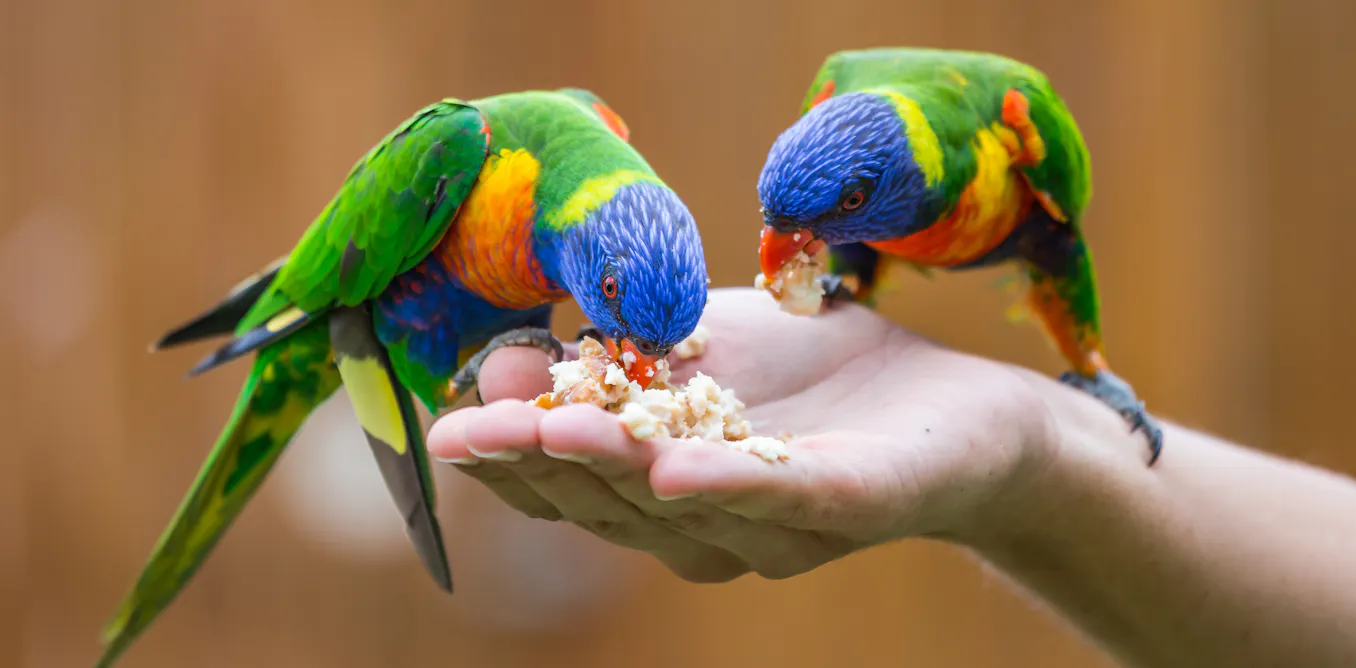
Feeding wild birds heightens the risk of disease transmission at feeding locations. When we offer supplementary food, such as seeds or meat scraps, this attracts birds of many different species in a combination and number that would not happen in nature. They may carry deadly diseases, such as the H5N1 virus, and potentially spread them to other birds.
This can create a transmission hotspot right on our back deck. And catching bird flu can push our most threatened species, such as the orange-bellied parrot, to the brink of extinction.
The fatal effects of H5N1 are not only contained to birds. Scavenger animals such as possums, red foxes and crows can be exposed to the virus while devouring the carcasses of infected birds. Humans in close contact with infected wildlife, such as wildlife carers and veterinarians, can contract H5N1. However, human infection is rare and typically only causes mild symptoms.